Read the audit report for 2021 here.
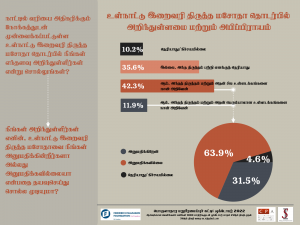
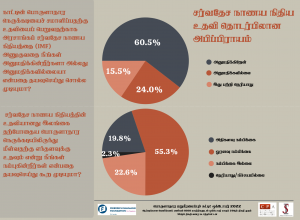
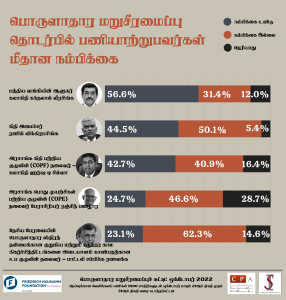
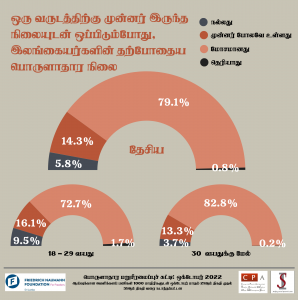
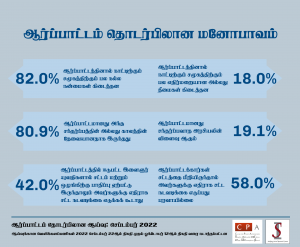
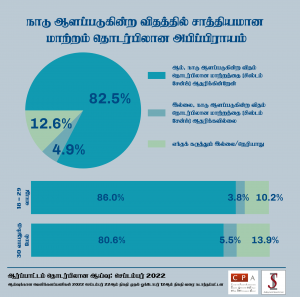
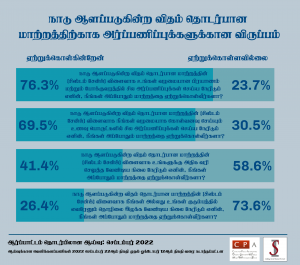
Summary Findings and Overview of the Survey on Aragalaya (Tamil)
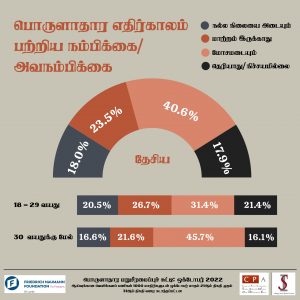
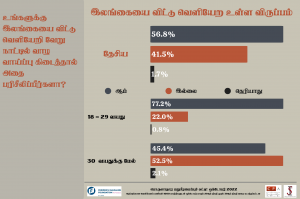
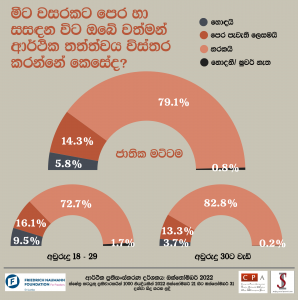
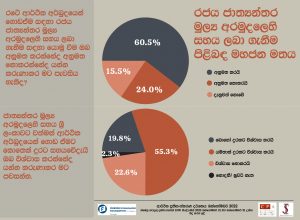
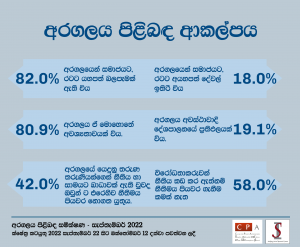
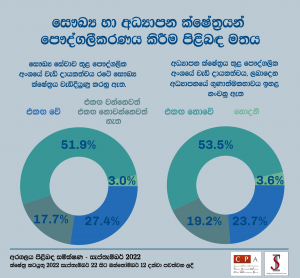
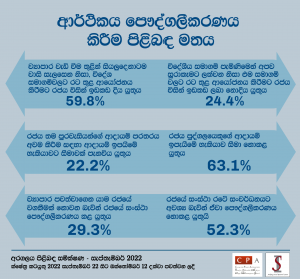
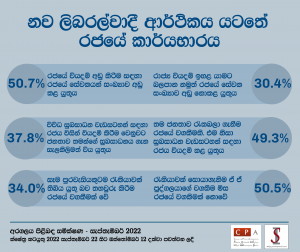
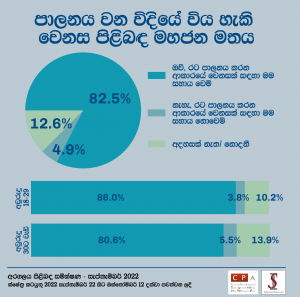
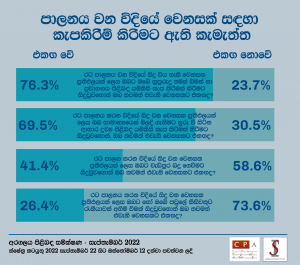
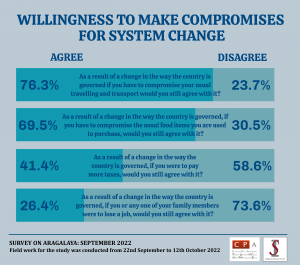
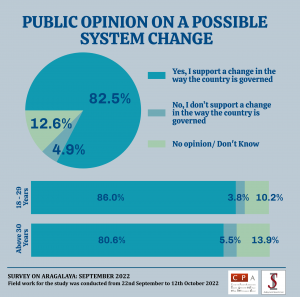
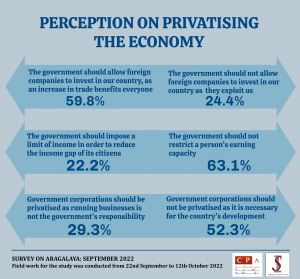
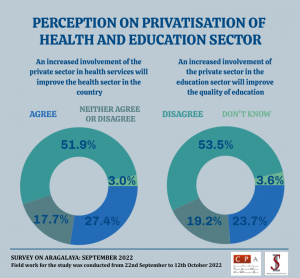
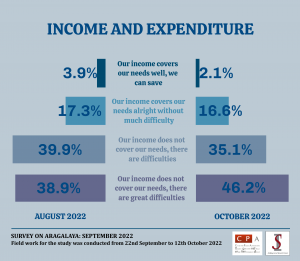
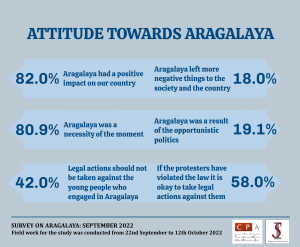
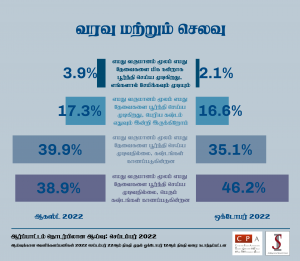
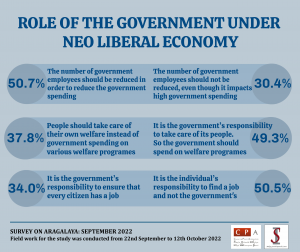
This report presents the summary findings and overview of the ‘Survey on Aragalaya’ (Protest) conducted by Social Indicator (SI), the survey research arm of the Centre for Policy Alternatives. In the backdrop of the economic and political crisis Sri Lanka is facing, this island-wide poll was designed with the aim of capturing the public attitude towards Aragalaya, and their economic ideology. Field work for the study was conducted from 22nd September to 12th of October.
Please download the Tamil version of the report here.


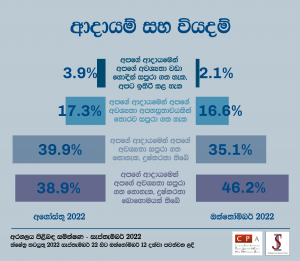
Summary Findings and Overview of the Survey on Aragalaya (Sinhala)
This report presents the summary findings and overview of the ‘Survey on Aragalaya’ (Protest) conducted by Social Indicator (SI), the survey research arm of the Centre for Policy Alternatives. In the backdrop of the economic and political crisis Sri Lanka is facing, this island-wide poll was designed with the aim of capturing the public attitude towards Aragalaya, and their economic ideology. Field work for the study was conducted from 22nd September to 12th of October.
Please download the Sinhala version of the report here.


Summary Findings and Overview of the Survey on Aragalaya
This report presents the summary findings and overview of the ‘Survey on Aragalaya’ (Protest) conducted by Social Indicator (SI): the survey and research arm of the Centre for Policy Alternatives. Against the backdrop of the economic and political crisis Sri Lanka is facing, this island-wide poll was designed with the aim of capturing the public attitude towards Aragalaya, and their economic ideology. Field work for the study was conducted from 22nd September to 12th of October.
Please download the English version of the report here. The Sinhala and Tamil versions of the report will be published in due course.


LANGUAGE RIGHTS AND THE CITIZENS’ APPROACH

The Centre for Policy Alternatives has been of the strong belief that if Sri Lanka is to move from a post-war to postconflict situation – that is one in which the sources of conflict are not sustained or reproduced and reconciliation achieved– addressing the language issue is of paramount importance. Language is at the heart of the ethnic conflict and therefore addressing the language issue will have great symbolic and more importantly practical significance for the peoples of Sri Lanka. It is fundamental and the resources involved far outweigh the benefits that would accrue short, medium and long –term in restoring trust and confidence in full citizenship for all and genuine respect, trust and confidence amongst them. CPA’s Language Programme seeks to make a difference in this respect. It involves citizens in the fulfillment of their constitutional rights and thereby speaks to their duties as well, as citizens and their responsibility for securing those rights. CPA records its appreciation of the cooperation provided to it in the implementation of this programme from the state sector and urges that the issue receives the policy prioritization and requisite resources it deserves. The ultimate objective after all is to embed language rights in the institutions and processes of governance and government, as well as in the popular culture to the point at which it no longer requires special mention and attention as a source of conflict, diminished citizenship and/or feelings of marginalization. We believe we have made some inroads as a programme; we believe that there is still a longer journey that must be made as a country determined to achieve its full potential.
This report, “Language Rights and the Citizens Approach” is a programme review of the Project Promoting Language Rights of Minorities (PLRM) which was carried out in five phases from 2011- 2016 .
Ongoing CPA advocacy includes FR case filed 21st March 2016 (SPFR 102/2016) seeking an order directing health authorities to ensure all labels and packaging containing information pertaining to medicines, medical devices and products are in Sinhala and Tamil, as the official languages of Sri Lanka. CPA has secured important victories in this area, including ensuring trilingual printings of legislation; bilingual NICs, trilingual transport notices and announcements; trilingual documentation by finance companies; and official undertakings to provide trilingual labeling of consumer and medical products. In 2019 following rounds of discussions and deliberations the NMRA directed all marketing authorisation holders of medicine to implement official language policy in labeling of medicines. With effect from 1st January 2020, therefore, it is directed that generic names should be included in Sinhala and Tamil by use of a sticker. Furthermore for 5 selected very commonly used medications a patient information leaflet has to be included, as a start, with instructions in both languages according to a prescribed format.

Other resource outputs from CPAs Language Rights advocacy include
Tamil Language Rights in Sri Lanka
Some press articles relevant to the programme are available here
TOPLINE REPORT OF THE CONFIDENCE IN DEMOCRATIC GOVERNANCE INDEX- WAVE 3

This survey report is the third wave of the Confidence in Democratic Governance Index, a scientific opinion poll that captures the public experience and opinion of the Aragalaya as well as various other aspects of the current economic and political crisis. As such, this study not only enhances ongoing political debate but also provides data-driven research to policymakers, academics, and various local and international stakeholders. This in turn supports a better understanding of the different dynamics prevalent among various social groups in society, which could help advocate for more sustainable policy interventions. The research study was conducted by Social Indicator (SI) the survey research arm of the Centre for Policy Alternatives.
Please download the Topline report in English here.
Please download the Executive Summary in Tamil here.
Please download the Executive Summary in Sinhala here.
Centre for Policy Alternatives (Guarantee) Ltd., and Dr. Paikiasothy Saravanamuttu vs. The Attorney General (In Re the Bill titled Bureau of Rehabilitation Act)
29th September 2022. The Centre for Policy Alternatives (CPA) and its Executive Director filed an application in the Supreme Court challenging the constitutionality of the Bill titled “Bureau of Rehabilitation Act”, published in the Gazette on 9th September 2022 and placed on the order paper of the parliament on 23rd September 2022.
The long title of the said Bill describes it as “an act to provide for the establishment of a bureau to be called and known as the bureau of rehabilitation; to regulate its powers, duties and functions and to provide for matters connected therewith or incidental thereto”. While the Petitioners recognized the need to integrate a process of rehabilitation into the criminal justice system, they noted that the impugned regulations violate several of the Constitutionally guaranteed Fundamental Rights, of the Petitioners as well as of the general public. The Petitioners contended that the process of rehabilitation should be done lawfully, with due respect and concern for due process standards, while respecting constitutionally guaranteed rights and liberties.
The Petitioners maintained that certain provisions in the Bill are inconsistent with Articles 10, 11, 12 (1), 13 (1), 13(2), 13(3), 14 A, 14 (1) in the Fundamental Rights Chapter of the Constitution. In view of the inconsistencies with the provisions of the Fundamental Rights chapter noted above, the Petitioners stated that the Bill has a prejudicial impact on the sovereignty of the People, and cannot be enacted into law except with the approval of the People at a Referendum, in addition to a 2/3 majority of the whole number of Members of Parliament voting in its favour.